
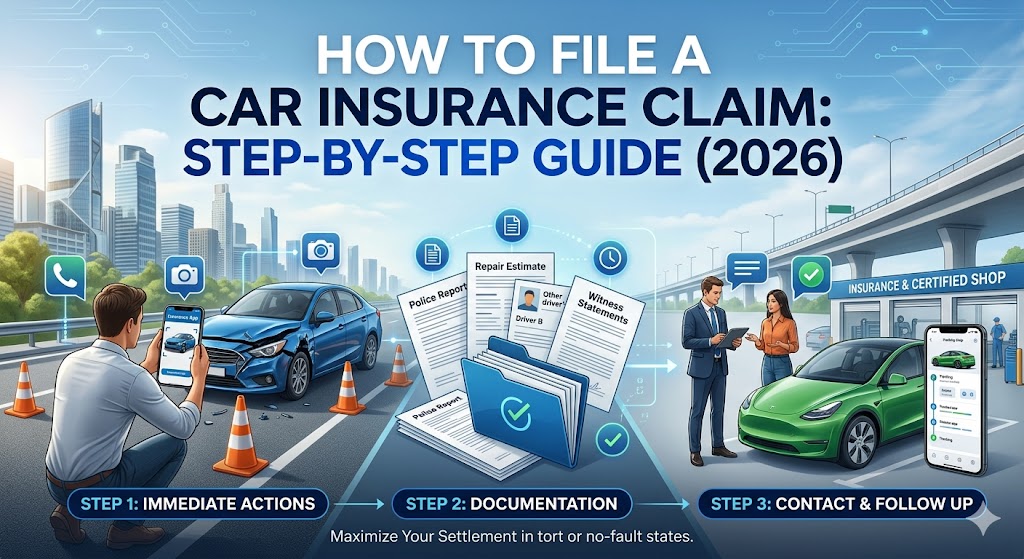
Step-by-Step Guide: Filing a Car Insurance Claim After an Accident
Being involved in a vehicle collision is a high-stress event, but the actions you take in the minutes and days following the incident can determine the success of your auto insurance claim. Whether you are driving a luxury Tesla or a standard sedan, understanding the claims process is essential for securing the compensation you deserve.
As we navigate through 2026, insurance companies have integrated advanced AI and telematics into their claims processing, making speed and accuracy more critical than ever. This guide provides a comprehensive roadmap for filing an insurance claim effectively.
Phase 1: Immediate Steps at the Accident Scene
The first few moments are vital for gathering evidence that your insurance adjuster will use to evaluate your case.
-
Prioritize Safety First: Check for injuries and call 911 immediately if medical attention is required.
-
Document Everything: Use your smartphone to take high-resolution photos of vehicle damage, road conditions, and traffic signals.
-
Exchange Information: Collect the other driver’s name, contact details, driver’s license number, and insurance policy info.
-
Do Not Admit Fault: Avoid discussing specifics or responsibility with other parties, as these statements can be used against you during the liability investigation.
Phase 2: Understanding the Legal Framework (2026 Updates)
US insurance laws vary significantly by state. Knowing your state’s legal doctrine is the first step in deciding where to file your claim.
1. No-Fault States (PIP Coverage)
In states like Florida, Michigan, and New York, you are required to file bodily injury claims with your own insurer through Personal Injury Protection (PIP), regardless of who caused the accident. In Florida, for instance, you must seek medical treatment within 14 days to qualify for these benefits.
2. Tort (At-Fault) States
In the majority of states, the driver who caused the accident is responsible for the damages. You can file a “third-party claim” against their insurance.
3. Statute of Limitations
Deadlines for filing vary. While many policies require “prompt” notification (usually within 24-72 hours), legal deadlines for lawsuits can range from two to six years depending on the state. For example, Florida recently shortened its statute of limitations for negligence to two years.
Phase 3: Top-Rated Insurance Carriers for Claims in 2026
Choosing a company with a high claims satisfaction rating ensures a smoother recovery process. Based on 2026 data, here are the leaders in the industry.
Table 1: 2026 Claims Satisfaction & Pricing Comparison
Phase 4: How to File Your Claim (The Mechanical Steps)
Once you are safe and have your documentation ready, follow these steps:
-
Report the Incident: Contact your insurer via their mobile app, website, or 24-hour claims line.
-
Assigning an Adjuster: The company will assign a professional to investigate the claim, review police reports, and inspect vehicle damage.
-
Repair Estimates: You have the right to get an independent estimate from your preferred repair shop, though insurers often recommend their own “network” shops for faster processing.
-
Settlement: Most claims are settled within 7 to 30 days after all paperwork is submitted.
Frequently Asked Questions (FAQ)
Q: Should I file a claim if the accident was minor? Even for minor accidents, it is wise to report it to your insurer. Hidden damage or late-onset medical issues can arise, and failing to report “promptly” could lead to a future claim denial.
Q: Will my rates go up after an at-fault accident? Typically, yes. However, companies like Erie offer rate-lock features, and others provide “accident forgiveness” for your first incident.
Q: Can I track the status of my claim? Yes. In 2026, top carriers like Travelers and Nationwide offer real-time tracking through mobile apps and text notifications.
Q: What if the other driver is uninsured? If you have Uninsured Motorist (UM) coverage, your own policy will pay for your damages as if the other driver had insurance.
Conclusion
Navigating an insurance claim in 2026 requires a balance of quick action and meticulous documentation. By choosing a high-rated provider like USAA or Travelers and staying informed about state-specific laws, you can protect your financial interests after an accident. Remember, the quality of your evidence is the strongest tool in your arsenal when dealing with an insurance adjuster.
Leave a Reply